Your child knows where to find an answer. Help them learn how to judge it.
AI Detectives runs hands-on workshops for children ages 6 to 9. Your child trains an AI, checks what it produces against the evidence, and shows you the result. They investigate through physical activities and structured pair work on supplied laptops, and adults control every model request and result.
Take turns operating and checking; explain your choices to the instructor.
No homework
The learning finishes in the room, and the paper record goes home.
MOE and IMDA have offered Code for Fun to all upper-primary students since 2020. They are expanding its AI content. AI Detectives gives ages 6 to 9 an earlier foundation built for their stage. Read about the Code for Fun programme.
What we run
Three workshops, three ways of working with AI
Training it, judging what it reports, and directing it to build something. Build a Tiny AI leads naturally into Run an AI News Desk, while Build a Game with AI is its own path. Each one can be taken on its own.
Workshop A · 3 × 2-hour sessions
Build a Tiny AI
Your child teaches an AI from scratch, then puts it to work on Mars.
Children who have trained an AI themselves understand why it can be confidently wrong.
01
Teach it its first words
The AI starts knowing nothing. Your child feeds it examples until it can finish a sentence. Ends with: an AI that finishes their sentences, and a model card to keep.
02
Give it a job on Mars
Greenhouse reports or rover updates: your child picks the examples that turn a beginner into a specialist, then tests it against another pair’s challenges. Ends with: a specialist AI and a before/after test record to keep.
03
Turn it into an invention
Their specialist powers a Mars message writer. Your child checks every message against the colony facts and decides which are ready to send. Ends with: checked messages to keep, and one thing their AI still gets wrong.
At the final session: Your child shows you a message their AI wrote, a mistake they caught, and how they fixed it.
Workshop B · 2 × 2-hour sessions
Run an AI News Desk
Your child is editor-in-chief of Mars News. Every reporter is an AI, and your child decides what gets published.
Asking “where did this come from?” before believing an AI is a habit every child will need.
01
Publish the first edition
AI reporters file their stories. Your child traces each claim to its source, corrects the ones that don’t hold up, and holds one that isn’t ready. Comes home with: their first edition, on paper.
02
Breaking news changes everything
New evidence arrives that contradicts yesterday’s front page. Your child decides: correction, update, or keep waiting. Comes home with: a second edition and their editor’s record.
At the final session: Your child points to a headline, shows you the evidence behind it, and explains the one story they refused to run.
Workshop C · 3 × 2-hour sessions
Build a Game with AI
Your child builds a Mars rover game, gives it rules to drive itself, then races and improves it with a friend.
Your child practises asking clearly, checking results and improving a game for someone else.
01
Build it
Your child directs the AI to build a tiny rover game, plays it, then tests a chosen rule. Ends with: a playable maze and a paper record of their discovery.
02
Build a smart rover
Your child gives the rover rules to drive itself, then tries a new situation. Ends with: their own rover brain and an example of where its rules help or fall short.
03
Race day
Your child races, watches a friend play and tests an improvement. Ends with: a shared race game and a paper record of what they learned.
At the final session: Your child asks you to predict a move, shows what happens and explains one choice or limit in their game.
Session counts and lengths are what we plan to run and are still being rehearsed. They are confirmed in writing, with the dates and the fee, before anyone is asked to decide.
Inside the free introduction
The teaching method, shown rather than promised
Mission 1 is a free 45–60-minute introduction and the easiest way in, though no workshop requires it. Children train a pretend AI, inspect a prepared creative draft, and defeat a polished-looking mistake with evidence.
Case 01 · Train
Teach the Tiny AI
Robin
Can fly
Butterfly
Can fly
Dog
Cannot fly
Turtle
Cannot fly
Challenge: PenguinExamples missing
Train from examples
Case 02 · Revise
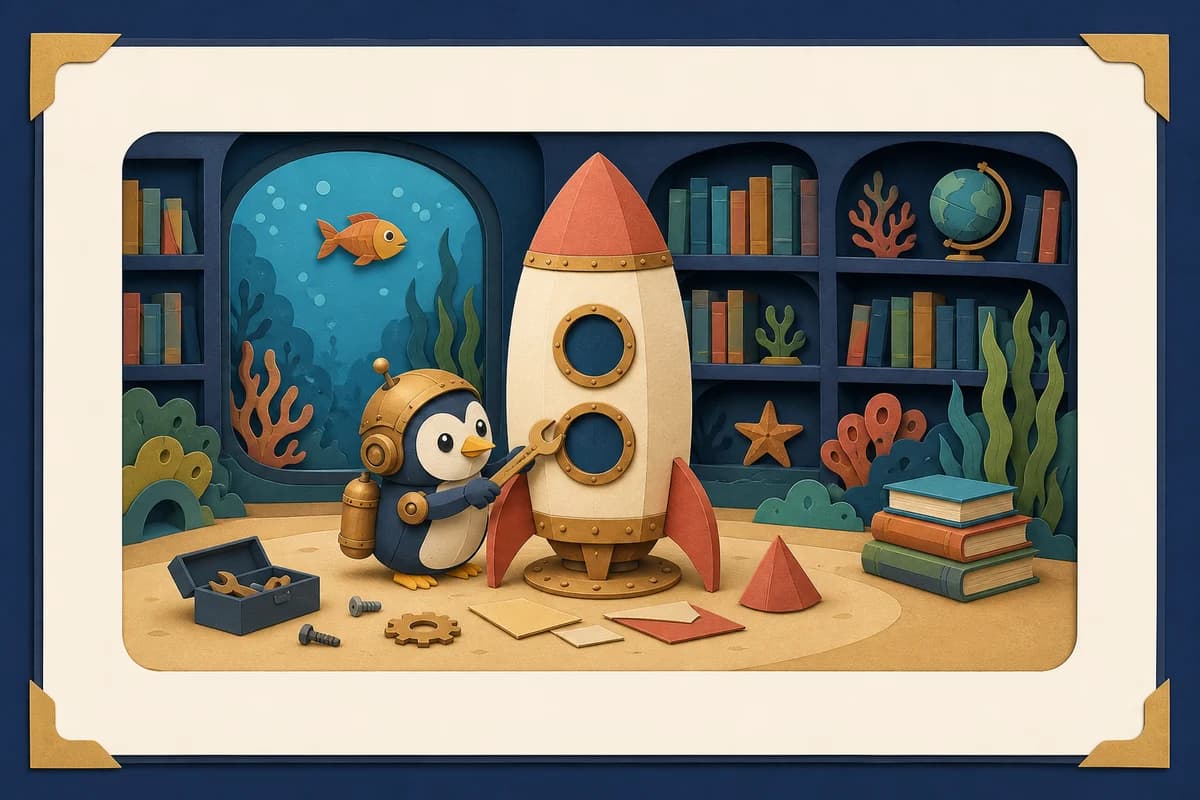
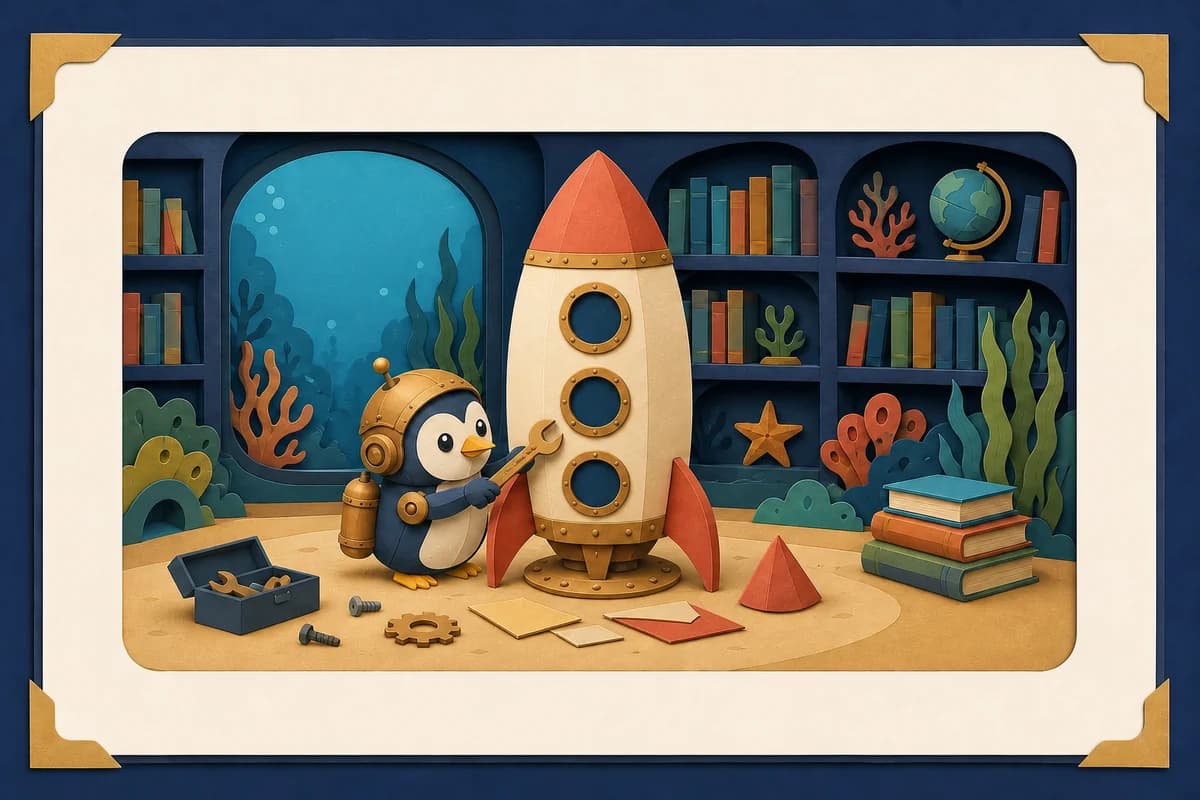
Brief: Robot penguin · 3 rocket windows · no fish
FIRST DRAFT
REVISION
Check every instruction
Case 03 · Inspect
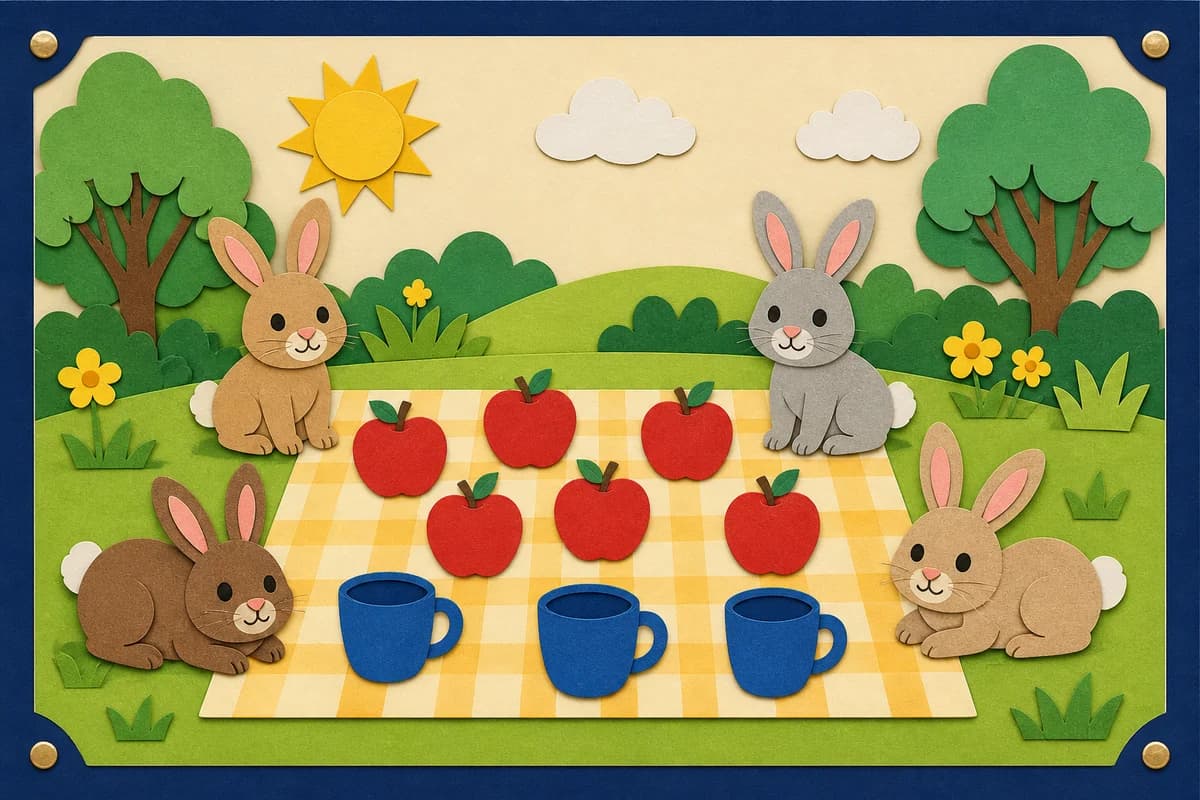
Requested: 5 apples · 4 cups · 3 rabbits
Explain the evidence
These are prepared examples. The class never depends on a live model failing on cue, and every projected item is screened before children see it.
Inside two hours
The room changes shape every few minutes
A workshop session runs in a classroom: pairs make choices, test and revise their own work, and explain it, with instructor guidance throughout. Each pair shares a supplied laptop and swaps operating and checking roles. This is the shape we plan and rehearse against, not a script read off a clock.
0–10 min
Pick up where they left off
Reopen last session's work and show one idea they remember. A first session opens on the challenge instead.
01
10–25 min
Demonstration and investigation
A short demonstration, then a physical investigation away from the screen.
02
25–50 min
Pair creation
One child operates and one checks, with a planned swap so both do each job.
03
50–65 min
Break
A real break of 10 to 15 minutes, not another promised activity.
04
65–90 min
Challenge and improve
Test the result, find where it fails, repair it, and swap roles again.
05
90–105 min
Finish and save
Save the pair's actual work and prepare a short explanation of it.
06
105–120 min
Show what changed
Each child shows one choice they made, its effect, and what they learned.
07
Ages 6 to 9, in a classroom, with an instructor and an assistant in the room.
One supplied laptop per pair: one child operates, the other checks, and they swap.
Real AI tools inside an instructor-controlled sandbox. No open chatbots, no child accounts, and no free-text chat with a model.
Each session is two hours including a 10 to 15 minute break, and ends with something your child can explain that they could not explain at the start.
Parent promise
Children learn AI without being handed an AI account.
Children compose with teacher-approved building blocks. An adult composes each model request and releases the screened result to the pair.
No child names, photographs, voices, private stories, or class votes go to an AI provider.
One supplied laptop per pair; families do not need to bring a device.
Children use no free-text chat, camera, microphone, or open browser.
No model calls happen at home: there is no homework and nothing to install.
The STOP Shield
S
Share no private details
T
Test important answers
O
Only with a grown-up
P
Pause and tell
Four gestures and four scenarios turn the rules into something a child can use when an interaction feels confusing, private, secretive, or unsafe.
Who teaches it
Maximilian Ahn
Founder and course instructor
Max has spent twenty years building data and AI inside major global banks. He founded an APAC data science function and an in-house training programme where non-technical colleagues built practical data skills.
His own children gave him the idea for AI Detectives. They hear about AI everywhere, and when he cannot answer one of their questions, they suggest asking ChatGPT. He built this to help younger children understand what AI produces and know when a person should stay in charge.
Anything operational that is not yet approved stays unstated. You receive the dates, venue, and fee before you decide anything.
Does my child need coding or AI experience?
No. Every workshop starts with familiar objects, physical games, pictures, and simple questions. Children build the mental model before they meet any technical vocabulary.
Do the workshops have to be taken in order?
No. Build a Tiny AI leads naturally into Run an AI News Desk, and Build a Game with AI is its own path. Each one can be taken on its own, introduces its own vocabulary, and does not need work saved from another. The free introduction is a good way in but is not a prerequisite.
How much screen time is involved?
Roughly half of a two-hour session is paired work on a Konsil-supplied laptop, in two blocks. The rest is demonstration, physical investigation, testing, explaining, and a 10 to 15 minute break.
Can an emerging reader take part?
Yes. Adults read instructions aloud, materials lead with one dominant visual idea, and children can point, sort, choose, move, and explain instead of completing written worksheets. Reading speed must not decide who owns the activity.
Does my child use ChatGPT?
Children receive no AI account and no free-text chatbot. Pairs compose from teacher-approved words, pictures, and constraints. An adult composes each model request from approved task material and reviews the screened result before the pair sees it.
Does anything come home?
Paper work always comes home: the model card, the test record, the edition, the rule card. For Build a Game with AI, the pair's saved game can be played in an ordinary web browser at home after each session, with no installation, no AI calls and no editing at home; we confirm the access period before booking. The other workshops promise the working demonstration in class and the paper record.
Do parents attend?
Attendance is not required and there is no homework. Two adults are in the room. At the final session your child demonstrates their work to you; if you cannot come, they take home an explanation and can demonstrate to an instructor instead.
What information is stored?
This interest form stores the parent's name, email, and selected answers so Konsil can contact the family. Child names, voices, photographs, private stories, and class votes are never sent to AI providers.
When will dates and fees be confirmed?
Build a Game with AI is planned next: S$295 per child for all three sessions, including the supplied classroom laptops, materials and home play, at Lumen Academy at d'Leedon on a Sunday morning or afternoon. Exact dates are not yet fixed. It runs only if enough families want it and our preparations and reviews are complete. Registering interest costs nothing and commits you to nothing, and you get the dates and confirmation steps in writing before you decide. Fees and dates for the other workshops are not yet settled.
Is this affiliated with MOE?
No. This is an independent Konsil course. Its curriculum is informed by international AI-literacy frameworks, including UNESCO's student framework and AI4K12.
No payment, nothing booked
Register your interest
Build a Game with AI is planned next. It runs only if enough families want it and our preparations and reviews are complete. Tell us which ones appeal and Konsil will email you the dates and confirmation steps, or tell you plainly if it does not go ahead.
Registering commits you to nothing.
There is nothing to pay and nothing to cancel. You decide once you have the details in writing.